A furnace that quits on the coldest night of January isn’t just inconvenient, it’s a safety hazard and an expensive emergency call. Regular furnace maintenance keeps heating systems running efficiently, extends equipment lifespan, and catches potential carbon monoxide risks before they become deadly. Whether a homeowner schedules annual professional service or tackles basic upkeep tasks between visits, staying on top of furnace care means fewer breakdowns, lower utility bills, and peace of mind when temperatures drop. This guide covers what professional maintenance includes, how to find qualified local technicians, and which tasks are safe for DIYers to handle on their own.
Table of Contents
ToggleKey Takeaways
- Regular furnace maintenance reduces energy consumption by 15–20% while preventing dangerous carbon monoxide leaks and preserving manufacturer warranties.
- Verify state licensing, NATE certification, and liability insurance when selecting a qualified local furnace maintenance professional, and always request a written diagnostic report.
- A professional furnace tune-up includes combustion analysis, heat exchanger inspection, blower cleaning, safety control testing, and venting system checks—all critical for safe and efficient operation.
- Homeowners can safely perform DIY maintenance like changing filters monthly, cleaning flame sensors, clearing condensate drains, and maintaining furnace clearance between professional visits.
- Schedule furnace maintenance annually before heating season (late September or October), or twice yearly for older systems and high-efficiency heat pumps, budgeting $100–$300 for professional service.
Why Regular Furnace Maintenance Matters for Homeowners
A well-maintained furnace uses 15–20% less energy than a neglected one, according to Department of Energy estimates. Dust buildup on burners and heat exchangers forces the system to work harder, driving up monthly heating costs and shortening component life.
Beyond efficiency, safety is the bigger concern. Cracked heat exchangers or blocked flue pipes can leak carbon monoxide (CO) into living spaces, an odorless, colorless gas that kills over 400 people annually in the U.S. Professional maintenance includes combustion analysis and visual inspection of the heat exchanger, tasks that require specialized tools and training.
Regular service also preserves manufacturer warranties. Most furnace warranties require documented annual maintenance by a licensed HVAC technician. Skipping tune-ups can void coverage, leaving homeowners on the hook for expensive repairs or full system replacement.
Finally, catching small issues early prevents cascade failures. A worn blower motor bearing might add $150 to a tune-up bill but could save $800 later if the motor seizes and damages the control board. Preventive care is always cheaper than emergency repairs.
Finding Qualified Local Furnace Maintenance Professionals
Not all HVAC companies deliver the same quality of service. Start by verifying state licensing and liability insurance, both protect homeowners if something goes wrong during the visit. Most states require HVAC contractors to hold a mechanical or HVAC-specific license: check with the local building department or state licensing board.
Ask about NATE certification (North American Technician Excellence). NATE-certified techs pass rigorous exams covering furnace diagnostics, combustion analysis, and refrigeration. It’s the industry’s leading credential and a strong indicator of technical competence.
Get at least three written estimates for annual maintenance contracts. Compare what’s included, some companies offer basic filter swaps and visual checks, while others include full combustion testing, blower cleaning, and priority emergency service. The cheapest bid often reflects the lightest scope of work.
Platforms like Angi compile customer reviews and ratings for local technicians, making it easier to compare contractors based on past performance. Read recent reviews (within the last year) and watch for patterns: repeated mentions of late arrivals, upselling, or incomplete work are red flags.
What to Look for in a Local HVAC Technician
A trustworthy technician arrives on time, wears clean company uniforms or ID badges, and explains findings in plain language. They should provide a printed diagnostic report after the visit, listing test results (static pressure, temperature rise, combustion efficiency) and recommended repairs.
Beware of high-pressure sales tactics. If a tech insists the furnace needs immediate replacement without showing clear evidence (like a visibly cracked heat exchanger or failed safety limit), get a second opinion. Legitimate professionals present options and let homeowners decide.
Ask if they carry common replacement parts on their truck. The best local companies stock standard igniters, flame sensors, and capacitors, allowing same-visit repairs instead of scheduling callbacks.
Finally, confirm they pull permits for any work that requires it. Replacing a furnace or relocating gas lines always requires permits and inspection. Contractors who skip this step leave homeowners liable for code violations.
What’s Included in a Professional Furnace Tune-Up
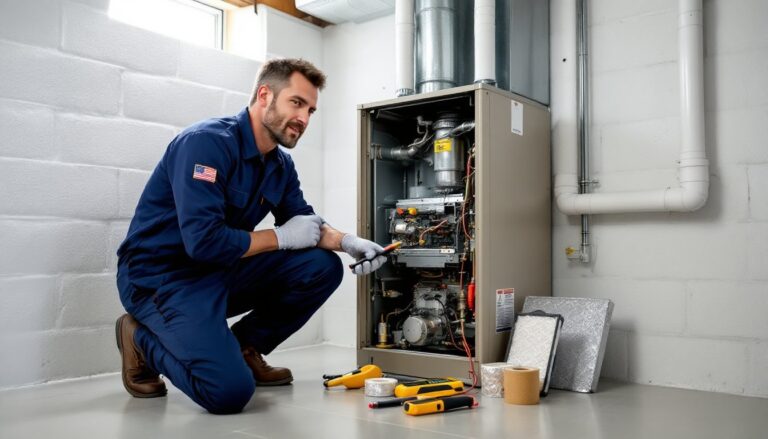
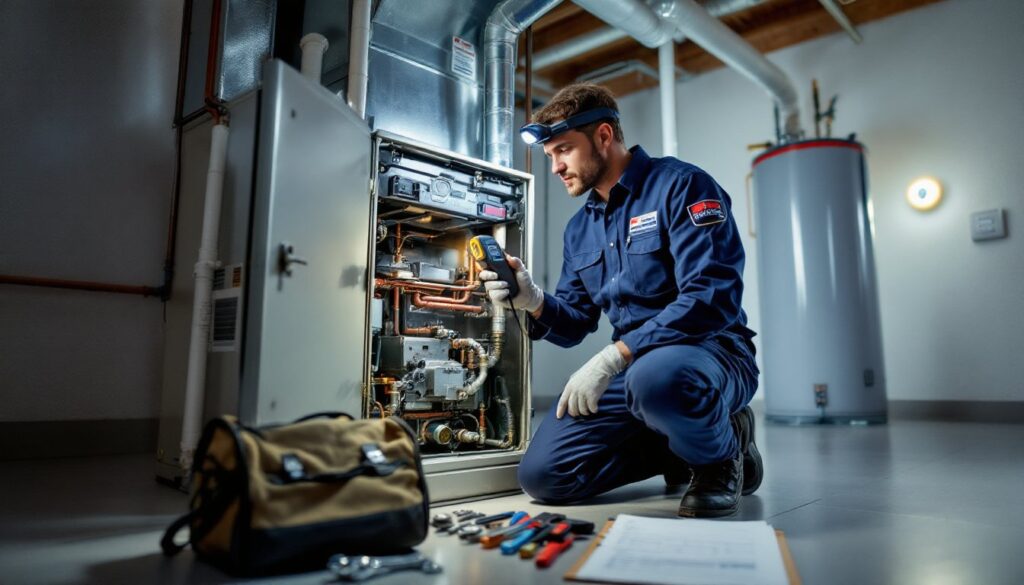
A thorough professional tune-up takes 60–90 minutes and covers both the furnace and the broader HVAC system. The technician starts by shutting off power and gas, then removing access panels to inspect internal components.
Combustion analysis is the cornerstone of furnace service. Using a flue gas analyzer, the tech measures oxygen, carbon monoxide, and nitrogen oxide levels in the exhaust. Readings outside acceptable ranges indicate incomplete combustion, often caused by dirty burners or improper gas pressure. The technician adjusts the air-fuel mixture to optimize efficiency and safety.
The heat exchanger gets a close visual inspection, often with a borescope camera to check areas hidden behind baffles. Cracks, rust, or soot buildup signal serious problems. Heat exchanger replacement often costs more than half the price of a new furnace, so catching small cracks early can inform replacement timing.
The blower assembly is pulled and cleaned. Dust on blower wheels reduces airflow, which increases energy use and can trip the high-limit switch, causing short-cycling. Many homeowners handling seasonal maintenance tasks focus on filters but overlook the blower itself.
Techs also test all safety controls: the flame sensor (verifies flame presence), pressure switches (confirm proper venting), and limit switches (prevent overheating). Failed safeties are common reasons for no-heat calls: replacing them during a tune-up costs far less than an emergency visit.
Finally, the technician inspects the venting system, the flue pipe or PVC condensate drain on high-efficiency models. Blockages from nests, debris, or ice can cause dangerous backdrafting or system lockout.
DIY Furnace Maintenance Tasks You Can Do Yourself
Homeowners can safely handle several maintenance tasks between professional visits. Always shut off power at the breaker and turn the gas valve to “off” before opening the furnace cabinet.
Filter replacement is the most critical DIY task. Standard 1-inch fiberglass filters should be changed monthly during heating season: thicker 4- or 5-inch pleated media filters last 6–12 months. Check the filter slot, if light doesn’t pass through the media, it’s time to swap it. A clogged filter restricts airflow, forcing the blower motor to work harder and risking overheating.
Inspect and clear the condensate drain line on high-efficiency furnaces (90%+ AFUE models). These units produce acidic water that drains through a small PVC pipe. Pour a cup of white vinegar or diluted bleach down the drain every few months to prevent algae buildup. A clogged drain triggers a safety switch that shuts the furnace down.
Clean the flame sensor with fine-grit sandpaper or a dollar bill. This small metal rod sits near the burners and detects flame presence. Carbon buildup prevents it from sensing properly, causing the furnace to ignite and shut off after a few seconds. Remove the sensor (usually one screw), gently rub the rod until shiny, and reinstall.
Check the area around the furnace for clutter. Building codes (IRC) require 30 inches of clearance on the service side and prohibit storing combustibles (paint, gas cans, cardboard) within 3 feet. Blocked access slows technicians during service calls and poses fire risks.
For those tracking multiple systems, home maintenance checklists help organize seasonal furnace tasks alongside water heater flushes, GVAC filter changes, and other recurring upkeep.
Safety note: Never attempt to adjust gas pressure, disassemble the heat exchanger, or bypass safety controls. Those tasks require licensed professionals and specialized tools. DIY work should stay limited to filters, sensors, and basic cleaning.
How Often Should You Schedule Furnace Maintenance?
Most manufacturers and HVAC professionals recommend annual furnace maintenance before heating season begins, ideally in late September or early October. Scheduling early ensures availability and catches problems before the first cold snap.
Older furnaces (15+ years) or systems in dusty environments may benefit from twice-yearly service: once before winter and a quick check mid-season. Homes with pets, smokers, or construction dust accumulate debris faster, increasing blower and filter strain.
Heat pumps serving both heating and cooling need two tune-ups per year: one before summer and one before winter. The heating and cooling cycles stress different components, and each mode requires specific checks.
Budget $100–$200 for a single tune-up or $150–$300 annually for a maintenance contract. Contracts often include priority scheduling, discounted repairs, and waived trip fees, valuable perks during emergencies. Prices vary by region, furnace complexity, and company overhead, so quotes can swing 30% or more between contractors.
Platforms like HomeAdvisor provide cost estimators and contractor matching based on location and project scope, helping homeowners compare local pricing before committing.
Don’t skip maintenance even if the furnace seems fine. Most failures happen gradually, small efficiency losses and minor part wear compound over seasons until a critical component fails. Regular service keeps systems running longer, often extending furnace life from 15 years to 20+ with proper care.
Conclusion
Furnace maintenance isn’t glamorous, but it’s one of the highest-return investments a homeowner can make. Annual professional service catches safety hazards, improves efficiency, and prevents expensive breakdowns when heat matters most. Between pro visits, replacing filters and clearing drains keeps systems running smoothly. Schedule the tune-up before the cold arrives, verify the technician’s credentials, and don’t gamble on skipped maintenance, frozen pipes and emergency hotel stays cost far more than a $150 service call.