
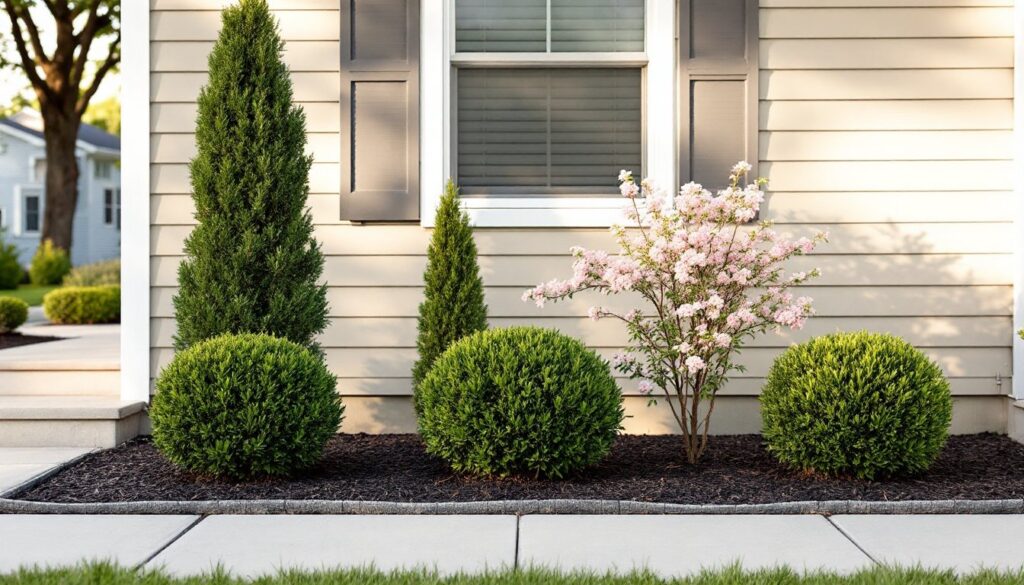
A well-planted front yard shouldn’t demand every Saturday morning and half your water bill. The right shrubs can frame your entrance, add year-round structure, and boost curb appeal without constant pruning, deadheading, or babysitting. Low maintenance shrubs deliver big visual impact with minimal input, ideal for homeowners who want a polished landscape without the ongoing workload. This guide covers proven varieties that thrive across climate zones, plus practical planting and design strategies to make your front yard look intentional and inviting from day one.
Table of Contents
ToggleKey Takeaways
- Low maintenance shrubs require minimal pruning and watering once established, making them ideal for homeowners who want a polished front yard without constant upkeep.
- Quality landscape plantings, including low maintenance shrubs, can increase your home’s resale value by up to 10% according to the National Association of Realtors.
- Top choices include evergreens like boxwood and inkberry holly for year-round structure, and flowering varieties like Knock Out roses and hydrangeas for seasonal color.
- Plant shrubs in spring or early fall at the correct depth with proper soil preparation and mulching to ensure they establish well and thrive for years with minimal care.
- Design your front entrance by layering shrubs by height, grouping in odd numbers, and mixing evergreens with flowering deciduous varieties to create visual depth and winter interest.
- Avoid constant shearing and respect mature shrub sizes during initial planning to prevent turning a low maintenance landscape into a high-maintenance burden.
Why Choose Low Maintenance Shrubs for Your Front Yard?
Front yard landscaping takes a beating. It faces full sun or deep shade, road salt in winter, foot traffic, and whatever the neighbor’s sprinkler overspray delivers. Low maintenance shrubs handle these stressors without weekly intervention.
They require less water once established, typically needing deep watering only during prolonged drought. Most tolerate a range of soil types and pH levels, so you’re not amending beds every season. Pruning needs are minimal, once or twice a year max, often just to shape rather than control rampant growth.
From a design standpoint, shrubs provide architectural structure that perennials and annuals can’t match. They anchor corners, define walkways, and frame doorways. Evergreen varieties keep that structure through winter, so your house doesn’t look bare from November through March.
Finally, mature shrubs increase property value. A National Association of Realtors study found that quality landscaping can add up to 10% to a home’s resale value. Front yard plantings make the first impression, and shrubs that look healthy without obvious effort signal a well-maintained property overall.
Top Low Maintenance Shrubs That Thrive in Any Climate
Evergreen Options for Year-Round Beauty
Boxwood (Buxus spp.) remains the gold standard for formal hedges and foundation plantings. It tolerates shearing well, grows slowly (about 3-6 inches per year), and handles partial shade. ‘Green Velvet’ and ‘Winter Gem’ are cold-hardy to USDA Zone 4. Space plants 2-3 feet apart for a hedge, or use individually as corner accents. Watch for boxwood blight in humid regions, select resistant cultivars if it’s an issue locally.
Inkberry Holly (Ilex glabra) offers a native alternative with similar form but better disease resistance. It grows 5-8 feet tall, works in wet or dry soil, and produces small black berries that birds love. ‘Gem Box’ stays compact at 3 feet. Unlike other hollies, inkberry doesn’t need a male pollinator for fruiting.
Dwarf Alberta Spruce (Picea glauca ‘Conica’) brings conical evergreen structure without the bulk of a full-size conifer. Topping out at 10-12 feet over many years, it needs zero pruning to maintain its shape. It’s hardy to Zone 2 but struggles in hot, humid summers, best for northern regions or cool microclimates.
Japanese Yew (Taxus cuspidata) thrives in shade where most shrubs sulk. It tolerates heavy pruning, deer browse less than other evergreens, and grows in dense or rocky soil. All parts are toxic to humans and pets, so skip it if you have young kids or dogs that chew plants. ‘Capitata’ grows upright to 10-15 feet: ‘Nana’ stays under 3 feet.
Flowering Shrubs for Seasonal Color
Knock Out Roses revolutionized rose growing by eliminating black spot, requiring no deadheading, and blooming from spring to frost. They handle Zone 5-11, grow 3-4 feet tall, and come in red, pink, yellow, and coral. Plant in full sun (6+ hours) and mulch roots to retain moisture. Even though their low-maintenance reputation, they still benefit from an annual spring pruning to remove dead wood.
Spirea (Spiraea spp.) delivers clouds of white or pink flowers in spring or summer, depending on variety. ‘Goldflame’ offers chartreuse foliage that shifts to orange in fall: ‘Little Princess’ forms a tidy 2-foot mound. Spirea tolerates clay soil, handles occasional drought, and requires only a light shearing after bloom. It’s hardy from Zone 3-8 and works well as a low hedge or mass planting.
Hydrangea ‘Incrediball’ (Hydrangea arborescens) produces massive white blooms on new wood, so it flowers reliably even after harsh winters. Unlike mophead hydrangeas, it doesn’t require specific soil pH for color and grows in full sun to part shade. Cut stems back to 12-18 inches in late winter. Grows 4-5 feet tall and wide: space 4 feet apart for a flowering screen.
Butterfly Bush (Buddleia davidii) attracts pollinators without attracting maintenance. Newer sterile cultivars like ‘Miss Ruby’ and ‘Blue Chip Jr.’ won’t self-seed aggressively. They bloom on new growth, so cut stems to 12 inches in early spring. Full sun and decent drainage are the only real requirements. Hardy Zones 5-9: mulch roots heavily in Zone 5.
How to Plant and Care for Front Yard Shrubs
Timing: Plant container-grown shrubs spring through fall, but spring or early fall gives roots time to establish before temperature extremes. Balled-and-burlapped stock goes in during dormancy, late fall or early spring.
Site Prep: Dig a hole 2-3 times the root ball width but no deeper than the root ball height. Shrubs planted too deep suffocate. Loosen soil on the hole sides with a spading fork to prevent glazing, especially in clay. Skip soil amendments unless your soil is truly terrible, shrubs adapt better to native soil than to a pampered planting pocket.
Planting Steps:
- Remove the container or cut away burlap and wire baskets (leave natural burlap underneath if it’s true jute).
- Check root condition. If roots circle the ball, score sides with a knife or tease them loose.
- Set the shrub so the root flare sits at or slightly above grade. Backfill halfway, water to settle soil, then finish backfilling.
- Build a 3-inch soil berm around the planting hole to create a watering basin.
- Apply 2-3 inches of shredded hardwood mulch, keeping it 2 inches away from stems.
Watering: Newly planted shrubs need consistent moisture for the first growing season. Water deeply 2-3 times per week if rainfall is under 1 inch. Established shrubs (year two onward) are drought-tolerant but perform better with occasional deep watering during dry spells.
Fertilizing: Most low-maintenance shrubs don’t need annual feeding. If growth seems weak or foliage yellows, apply a balanced slow-release fertilizer (10-10-10) in early spring. Avoid high-nitrogen formulas on flowering shrubs, they’ll push foliage at the expense of blooms.
Pruning: Prune spring-flowering shrubs (spirea, forsythia) right after bloom. Summer and fall bloomers (butterfly bush, hydrangea) get cut back in late winter. Evergreens need minimal pruning, remove dead or damaged branches anytime, shape lightly in late spring. Wear gloves and safety glasses when pruning: some shrubs have irritating sap or thorns.
Design Tips for Arranging Shrubs at Your Front Entrance
Scale to the house: A single-story ranch needs smaller shrubs (3-4 feet mature height) than a two-story colonial. Foundation plantings shouldn’t block windows or crowd siding. Leave 3-4 feet between shrubs and the house for air circulation and maintenance access.
Layer heights: Place taller shrubs (5-8 feet) at corners, mid-height varieties (3-5 feet) along foundation lines, and low growers (under 3 feet) in front or along walkways. This creates depth and prevents a flat, single-plane look. Stagger placements rather than lining them up like soldiers.
Odd numbers look better: Group shrubs in threes or fives for a natural, asymmetrical feel. Even-numbered plantings read as formal, which works for some architectural styles but feels stiff on others. Many design approaches emphasize repetition, using the same shrub on both sides of an entrance creates symmetry without looking rigid if you vary underplantings.
Mix evergreen and deciduous: Anchor beds with evergreens for winter structure, then add flowering deciduous shrubs for seasonal interest. A ratio of roughly 60% evergreen to 40% flowering keeps the front yard from looking bare in winter while providing color in growing season.
Respect mature size: Don’t plant a shrub that grows 8 feet wide in a 4-foot space, planning to “keep it pruned.” Constant shearing stresses plants, ruins their natural form, and turns low-maintenance into high-maintenance. If space is tight, choose dwarf cultivars from the start.
Mulch beds properly: Define planting beds with a clean edge (half-moon edger or flat spade works) and maintain 2-3 inches of mulch. Replenish annually as it decomposes. This suppresses weeds, conserves moisture, and gives a finished look. Avoid mulch volcanoes piled against stems, they promote rot and pest issues.
Consider utilities and access: Check for buried lines (call 811 before digging), avoid planting over septic fields, and leave clear access to hose bibs, electric meters, and HVAC units. Plan for snow removal paths if you live where that’s relevant.
Conclusion
A well-chosen shrub does the work for you, anchoring your front yard through seasons, weather, and the inevitable periods when yard work falls to the bottom of the list. Stick with proven varieties suited to your zone, plant them right the first time, and you’ll have a front entrance that looks intentional and cared-for without constant intervention.