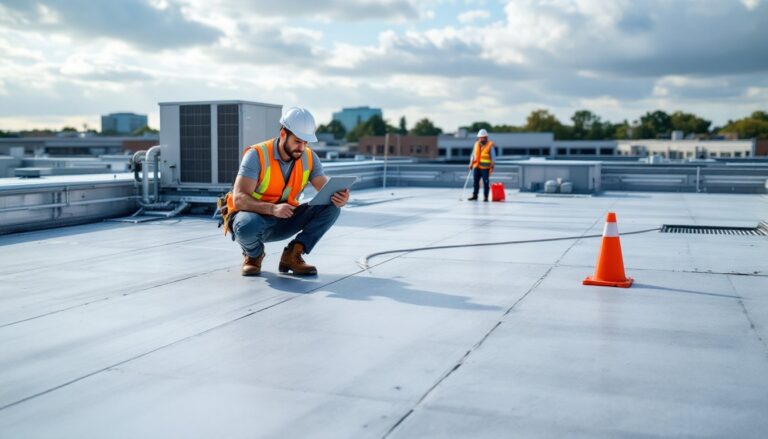
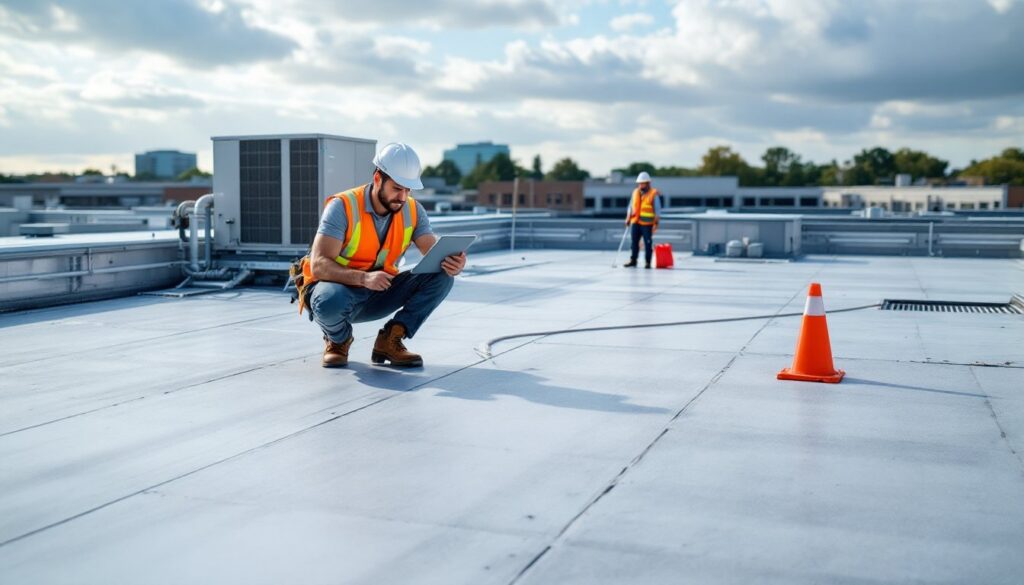
A commercial roof isn’t just shingles and tar, it’s a multi-layered system protecting inventory, equipment, and structural integrity. Unlike residential roofs, commercial systems (TPO, EPDM, built-up, modified bitumen) span thousands of square feet and face heavy UV exposure, ponding water, and thermal cycling. When something fails, it’s rarely a small leak: it’s a business interruption. Most commercial property owners don’t have the in-house expertise or bandwidth to inspect drain scuppers, check membrane seams, or track warranty compliance. That’s where a commercial roof maintenance contract comes in, a scheduled service agreement that shifts reactive patching to proactive care, extending roof life and preventing expensive emergency calls.
Table of Contents
ToggleKey Takeaways
- Commercial roof maintenance contracts shift property owners from expensive reactive repairs to proactive scheduled care, typically costing $0.10–$0.30 per square foot annually and preventing leaks that can cost $1,500–$5,000 per incident.
- Most commercial roof maintenance contracts include biannual or quarterly inspections covering membrane integrity, flashing, penetrations, and drainage systems, with documented reports required for warranty compliance on single-ply membranes like TPO and EPDM.
- A well-maintained commercial roof can last 20–30 years instead of 12, significantly delaying costly replacements that typically range from $200,000–$500,000 and improving property valuation during refinancing or sale.
- Effective maintenance contracts require selecting contractor certifications specific to your roof system type, comparing flat-fee versus tiered billing structures, and setting aside 10–20% contingency for repairs beyond the included scope.
- Documented maintenance records create a defensible liability protection against water intrusion, mold, and structural damage claims, while providing tax benefits as deductible operating expenses rather than capital improvements.
What Is a Commercial Roof Maintenance Contract?
A commercial roof maintenance contract is a formal agreement between a property owner and a licensed roofing contractor for ongoing inspections, preventive repairs, and documentation over a set period, typically one to five years. It’s not a warranty replacement plan: it’s scheduled care designed to catch problems before they escalate.
Most contracts include two to four site visits per year, timed around seasonal transitions (spring thaw, fall before snow, post-storm checks). During each visit, technicians inspect membrane integrity, flashing, fasteners, drainage systems, penetrations (HVAC curbs, vents, skylights), and edge details. They document findings with photos and condition reports, then perform minor corrective work on the spot, resealing a loose seam, clearing a clogged drain, tightening a loose fastener.
Contracts are priced either as a flat annual fee or tiered by square footage and roof complexity. Some agreements bundle small repairs (under a dollar-per-square-foot threshold): others separate inspection fees from repair labor. Either way, the goal is predictable costs and a paper trail that satisfies warranty requirements and supports future insurance claims.
Key distinction: a maintenance contract is not a roof replacement plan. If your membrane is at end-of-life or your decking is compromised, no maintenance agreement will fix that, you’ll need a capital project. Contracts work best on roofs with 50% or more serviceable life remaining.
Why Commercial Roof Maintenance Contracts Matter for Property Owners
Commercial roofs are expensive to replace, often $200,000 to $500,000+ depending on square footage and system type. A well-maintained roof can last 20 to 30 years: a neglected one might fail at 12. Maintenance contracts extend that lifespan by addressing the three leading causes of premature failure: ponding water, membrane punctures, and flashing separation.
Warranty compliance is the silent reason most property managers sign contracts. Nearly all manufacturer warranties, especially on single-ply membranes like TPO and PVC, require documented biannual inspections by a certified contractor. Skip those, and your warranty is void. A maintenance contract automates compliance and creates a defensible service record if you ever file a claim.
From a financial planning perspective, contracts reduce budget volatility. Instead of scrambling for $15,000 to patch a leak that damaged ceiling tiles and HVAC ductwork, you’re paying a predictable $2,000 to $5,000 annually for inspections and minor fixes. Many property management firms budget maintenance contracts as an operating expense, not a capital surprise.
Contracts also improve tenant relations and property value. A documented maintenance history signals responsible ownership to prospective buyers or lenders. If you’re refinancing or selling, a current maintenance agreement and clean inspection reports can positively influence appraisals and due diligence.
Finally, there’s liability. A neglected roof can lead to water intrusion, mold, slip hazards, or even structural failure. Regular inspections create a documented defense if an incident occurs, you took reasonable steps to maintain the asset.
What’s Typically Included in a Roof Maintenance Agreement
Not all contracts are created equal. Before signing, review the scope of services line by line. Here’s what most agreements cover, and what they don’t.
Routine Inspections and Preventive Care
The core of any contract is scheduled inspections, usually twice a year, sometimes quarterly for high-risk roofs (those with heavy equipment loads, aggressive drainage issues, or aging membranes). Technicians check:
- Membrane condition: Look for blisters, punctures, UV degradation, seam separation, or alligatoring (a sign of aged modified bitumen or built-up roofs).
- Flashing and edge metal: Verify coping caps, termination bars, and drip edges are secure and sealed. Loose flashing is a fast track to water infiltration.
- Penetrations: Inspect boots and pitch pans around vents, pipes, HVAC curbs, and rooftop units. These are the most common leak points.
- Drainage: Clear debris from scuppers, gutters, downspouts, and roof drains. Check for ponding water (standing water after 48 hours indicates drainage or slope issues).
- Fastener and seam integrity: On mechanically fastened systems, check for loose or corroded fasteners. On fully adhered systems, test seam adhesion.
- Roof access and safety anchors: Verify ladders, hatches, and fall protection anchor points are secure and code-compliant.
After each visit, you’ll receive a written report with photos, condition ratings, and a priority list of recommended repairs. This documentation is critical for warranty compliance and insurance claims.
Preventive care often includes minor work performed during the visit: resealing a few loose seams, tightening fasteners, replacing damaged pipe boots, or clearing drains. Most contracts define “minor” as repairs taking under one to two labor hours or under a set dollar threshold (often $300 to $500 per visit). Anything beyond that becomes a separate estimate.
Emergency Repairs and Response Times
Some contracts include emergency service provisions, guaranteed response within 24 to 48 hours for urgent leaks or storm damage. This doesn’t mean free repairs: it means prioritized scheduling and sometimes discounted emergency rates.
Read the fine print. Does “emergency response” include temporary tarping and mitigation, or just an assessment visit? Are after-hours or weekend calls covered, or do they trigger premium rates? If your building operates 24/7 (healthcare, manufacturing, data centers), a contract with guaranteed rapid response can prevent costly downtime.
Most agreements exclude structural repairs, code upgrades, and full membrane replacement. If a storm tears off half your EPDM, that’s an insurance claim and a capital project, not a maintenance fix. Similarly, if inspections reveal rotted decking or inadequate insulation, those are separate scopes of work. A good contractor will flag those issues and provide estimates, but they’re not bundled into routine maintenance.
How to Choose the Right Maintenance Contract for Your Building
Not every building needs the same level of service. A five-year-old TPO roof on a low-profile office building has different needs than a 15-year-old built-up roof on a warehouse with heavy HVAC loads. Here’s how to match the contract to your situation.
Start with roof age and condition. If your roof is less than five years old and under warranty, a basic biannual inspection contract is usually sufficient to maintain warranty compliance. If it’s 10+ years old or showing early signs of wear, consider quarterly inspections or a contract that includes a larger repair budget.
Factor in building use. High-traffic roofs, those with frequent HVAC service, rooftop equipment, or employee access, experience more wear and need closer monitoring. Restaurants with grease-laden exhaust, for example, see faster membrane degradation around kitchen vents.
Check contractor credentials. Hire a contractor certified by your roof system’s manufacturer (GAF, Firestone, Carlisle, etc.). Certification ensures they’re trained on your specific membrane type and can perform warranty-compliant repairs. Ask for proof of general liability and workers’ compensation insurance, $1 million minimum for commercial work.
Compare contract structures. Some contractors offer all-inclusive contracts with a flat annual fee covering inspections and repairs up to a cap (e.g., $5,000 in labor). Others charge separately: a base fee for inspections, then hourly rates for repairs. All-inclusive plans provide budget certainty but may not be cost-effective if your roof rarely needs fixes. Separate billing works better for newer roofs.
Review response and reporting terms. How quickly will they respond to a non-emergency service call? What’s included in inspection reports, photos, thermal imaging, moisture scans? Can you access reports online? Properties with multiple buildings benefit from digital dashboards that track each roof’s condition over time.
Finally, ask for references from similar properties. A contractor experienced with flat EPDM roofs on warehouses may not be the best fit for a sloped metal roof on a retail center. Platforms like Angi often list commercial contractors with verified reviews and project portfolios.
Cost Considerations and Budgeting for Roof Maintenance Plans
Commercial roof maintenance contracts typically cost $0.10 to $0.30 per square foot annually, depending on roof size, complexity, and service frequency. For a 20,000-square-foot roof, expect $2,000 to $6,000 per year. Larger roofs (50,000+ square feet) often see lower per-square-foot rates due to economies of scale.
What drives cost variation?
- Roof type and condition: Single-ply membranes (TPO, PVC, EPDM) are easier to inspect and repair than built-up or modified bitumen systems with multiple layers. Older roofs require more frequent visits and larger repair budgets.
- Inspection frequency: Biannual visits cost less than quarterly. High-risk roofs may justify the added expense.
- Geographic location and access: Roofs in snow-heavy regions need post-winter inspections and ice dam mitigation. Urban properties with difficult access (downtown high-rises, roofs accessible only by freight elevator) command premium rates.
- Service inclusions: Contracts bundling minor repairs, emergency response, and thermal imaging cost more than inspection-only agreements.
Budget for repair overages. Even with a maintenance contract, you’ll occasionally face repairs outside the included scope, replacing a damaged HVAC curb, resealing a large flashing section, or upgrading outdated penetrations. Set aside 10% to 20% of the contract value as a contingency.
Compare contract cost to reactive repair savings. A single emergency leak repair averages $1,500 to $5,000 (plus potential interior damage costs). If a maintenance contract prevents even one major leak per year, it’s paid for itself. More importantly, it extends roof life, delaying a $300,000 replacement by even three years yields massive ROI.
Some contracts offer multi-year pricing locks, signing a three- or five-year agreement at a fixed annual rate. This protects against inflation and labor cost increases, and contractors often discount long-term commitments by 5% to 10%.
Don’t forget tax treatment. Maintenance contracts are generally deductible as operating expenses in the year incurred, unlike capital improvements (roof replacements), which must be depreciated over 39 years. Consult your accountant, but this distinction can influence cash flow planning.
Finally, factor maintenance into total cost of ownership. A roof maintained under contract for 20 years will outlast a neglected roof and require fewer disruptive mid-life interventions. When you eventually do replace it, you’ll have years of inspection data to inform material selection and design improvements, avoiding past problem areas and drainage failures.