A commercial roof represents one of the largest capital investments in any building, yet it’s often neglected until leaks appear or structural damage forces expensive emergency repairs. The difference between a roof lasting 15 years versus 30 years often comes down to one thing: a proactive maintenance plan. Without regular inspections and minor repairs, small issues like ponding water or damaged flashing escalate into membrane failures, interior damage, and full tear-offs costing tens of thousands of dollars. This guide walks through building a commercial roof maintenance plan that catches problems early, extends roof life, and protects the building envelope.
Table of Contents
ToggleKey Takeaways
- A commercial roof maintenance plan can extend roof life from 15 years to 30 years by catching problems early, saving $4 to $6 in major repairs for every dollar spent on preventive maintenance.
- Schedule roof inspections at least twice yearly—in spring after freeze-thaw cycles and in fall before winter weather—plus additional checks after major weather events to prevent costly damage.
- Document every inspection with photos, condition ratings, and repair lists to maintain warranty compliance, support insurance claims, and track recurring issues across your property.
- Monitor common failure points like ponding water, membrane tears, flashing defects, clogged drains, and open seams, as these are the leading causes of commercial roof leaks and system degradation.
- Budget 1% to 3% of your roof’s replacement value annually for maintenance; minor repairs of $300 to $1,200 caught early prevent emergency repairs costing $1,500 to $10,000 or full replacements ranging from $40,000 to $120,000.
Why a Commercial Roof Maintenance Plan Is Essential
Commercial roofing systems, whether built-up roofing (BUR), TPO, EPDM, PVC, or modified bitumen, are engineered to withstand weather, UV exposure, and thermal cycling. But they’re not maintenance-free.
Most commercial roofs carry warranties ranging from 10 to 30 years, but those warranties almost always require documented routine maintenance. Skip the inspections, and manufacturers can void coverage when premature failure occurs. Insurance claims for roof damage can also be denied if property owners can’t prove they maintained the system.
Beyond warranty compliance, a maintenance plan delivers measurable ROI. According to industry studies, every dollar spent on preventive maintenance saves roughly $4 to $6 in major repairs or replacement costs. Regular maintenance identifies issues like loose fasteners, open seams, or clogged drains before they compromise the membrane or insulation layers.
Commercial roof maintenance also protects interior operations. Water intrusion damages inventory, disrupts business, and creates mold risks that pose health hazards and liability. For multi-tenant buildings, roof leaks can lead to tenant disputes and lost rental income.
Finally, energy efficiency suffers when roofs degrade. Reflective coatings wear off, insulation becomes saturated, and HVAC systems work harder to compensate. A maintained roof keeps energy costs predictable.
Key Components of an Effective Commercial Roof Maintenance Plan
A solid commercial roof maintenance plan isn’t a one-time walkthrough, it’s a systematic approach built on regular inspections, detailed documentation, and prompt follow-through.
Seasonal Inspection Schedules
Commercial roofs should be inspected at least twice per year: once in spring after winter freeze-thaw cycles, and once in fall before winter weather arrives. Buildings in regions with heavy snow, high winds, or severe storms may need quarterly inspections.
Spring inspections focus on damage from ice dams, snow load stress, and freeze-thaw expansion that can crack membranes or displace flashing. Fall inspections prioritize clearing debris from drains and gutters, checking seams and fasteners, and ensuring the roof is ready for heavy precipitation.
After major weather events, hail, windstorms, hurricanes, or heavy snow, schedule additional inspections. Wind can lift membrane edges, hail can puncture single-ply systems, and fallen branches can tear roofing materials.
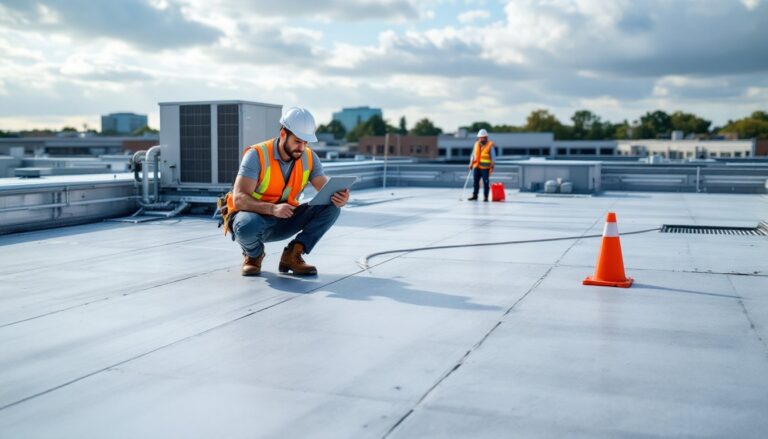
Inspections should cover the entire roof surface, all penetrations (vents, HVAC curbs, skylights), parapet walls, edge metal, and drainage systems. Note any ponding water that remains 48 hours after rain: standing water accelerates membrane degradation.
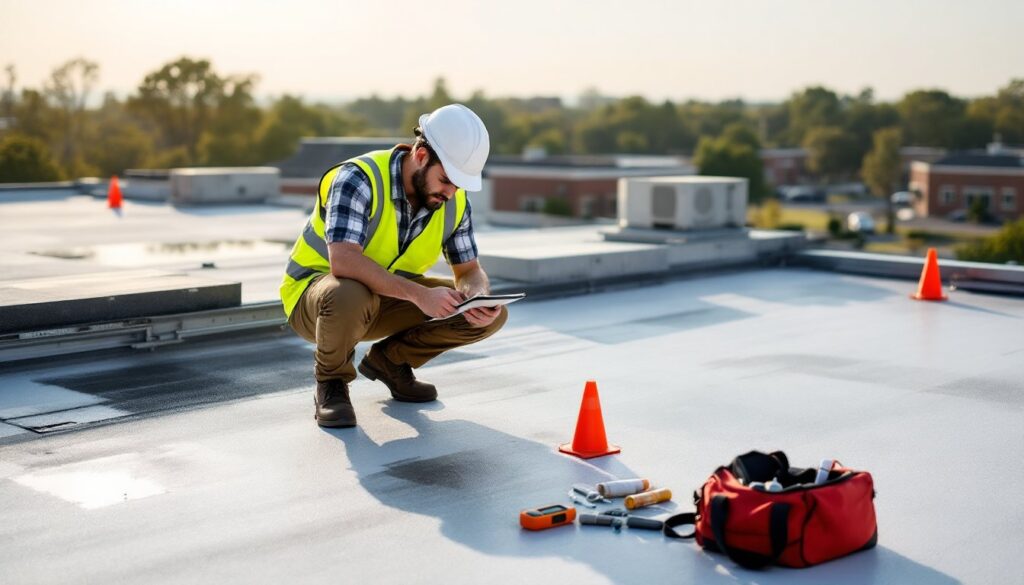
Who conducts inspections depends on roof complexity and building use. Facility managers can handle visual walkthroughs on simple low-slope roofs, but steep-slope systems, large buildings, or roofs with complex HVAC equipment often require licensed roofing contractors. Safety is non-negotiable: fall protection, proper footwear, and awareness of roof load limits are mandatory. Many building codes require fall protection systems on commercial roofs.
Documentation and Record-Keeping
Inspections mean nothing without documentation. Every roof visit should generate a written report that includes:
- Date and weather conditions at time of inspection
- Photos of problem areas, labeled with location markers
- Condition ratings for membrane, flashing, drainage, and penetrations
- List of repairs needed, categorized by urgency (immediate, within 30 days, or monitor)
- Work completed, including materials used and contractor name
Store records digitally with cloud backup. Warranties, repair invoices, material spec sheets, and inspection reports should all live in one accessible location. This documentation proves maintenance compliance if warranty or insurance claims arise, and it helps track recurring issues that might indicate systemic problems.
Established maintenance checklist strategies can streamline this documentation process and ensure nothing gets overlooked across multiple properties.
Common Commercial Roofing Problems to Monitor
Certain failure modes appear repeatedly across commercial roofing systems. Catching them early prevents minor fixes from becoming major tearouts.
Ponding water is enemy number one. Low-slope roofs should drain within 48 hours of rainfall. Persistent ponding indicates inadequate slope, clogged drains, or structural deflection. Standing water degrades membranes, promotes algae growth, and adds dead load that can overstress roof decking.
Membrane punctures and tears occur from foot traffic, falling tools, hail impact, or sharp debris. Single-ply membranes like TPO and EPDM are particularly vulnerable. Small punctures can be patched, but unrepaired tears allow water infiltration that saturates insulation and rots decking.
Flashing failures cause more leaks than membrane problems. Flashing seals roof-to-wall transitions, penetrations, and edges. Thermal expansion, UV exposure, and poor installation cause flashing to pull away, crack, or separate from substrates. According to experts at Bob Vila, flashing defects account for the majority of commercial roof leaks.
Clogged drains and gutters create backup conditions that flood roof surfaces and overflow into walls. Leaves, gravel, and wind-blown debris accumulate quickly. Interior drains with strainers should be checked monthly during fall: scuppers and gutters need seasonal clearing.
Blistering and ridging in built-up roofing or modified bitumen systems signal trapped moisture or poor installation. Blisters can rupture, exposing felt layers to UV and water. Ridging indicates movement in the membrane or substrate.
Open seams in single-ply systems are often installation errors that worsen over time. TPO and PVC seams are heat-welded: if welds fail, the membrane separates. EPDM uses adhesive or tape seams that can peel if substrate prep was inadequate.
Damaged edge metal and copings allow wind-driven rain to infiltrate perimeter areas. Loose fasteners, bent metal, or missing sealant all compromise the roof edge.
Vegetation and biological growth indicate chronic moisture. Moss, algae, and even tree seedlings can take root in debris-filled areas, and their root systems penetrate membranes.
Creating Your Custom Commercial Roof Maintenance Checklist
A maintenance checklist ensures consistency across inspections and prevents overlooked details. Tailor checklists to the specific roof type, building use, and regional climate.
Start with roof system basics:
- Overall membrane condition (cracks, tears, punctures, blisters)
- Seam integrity (all seams sealed and bonded)
- Fastener condition (exposed fasteners tight and sealed)
- Surface cleanliness (debris removed, no vegetation)
- Ponding water locations and depth
- Roof coating condition (if applicable)
Inspect all penetrations and equipment:
- HVAC curbs and supports (sealant intact, no rust)
- Vent pipes and stack flashing
- Skylights and hatches (glazing seals, hardware function)
- Satellite dishes and antennas (mounts secure, no membrane damage)
- Electrical conduit and junction boxes
Check drainage systems:
- Interior drains clear and flowing
- Scuppers unobstructed
- Gutters and downspouts clean and securely attached
- Overflow drains functional
Examine perimeter and edges:
- Edge metal and gravel stops secure
- Coping and counterflashing sealed
- Parapet walls (no cracks, mortar intact)
- Expansion joints sealed and flexible
Assess structural and safety elements:
- Roof deck deflection or sagging
- Visible rust or corrosion on metal decking
- Safety railings and anchor points secure (if present)
- Roof access ladder and hatch condition
Document findings with a simple rating system: Good (no action needed), Fair (monitor or schedule non-urgent repair), Poor (repair immediately).
Many organizations use digital maintenance checklist tools that allow photo uploads, GPS tagging, and automated reminders for follow-up inspections.
Cost Considerations and Budgeting for Roof Maintenance
Commercial roof maintenance costs vary widely based on roof size, type, accessibility, and regional labor rates, but budgeting for routine care is far cheaper than emergency repairs.
Inspection costs typically run $200 to $600 per visit for buildings under 20,000 square feet. Larger or complex roofs may cost $800 to $1,500. Many roofing contractors offer annual maintenance contracts that bundle two inspections with minor repairs (like sealant touch-ups or drain clearing) for $1,000 to $3,000 per year.
Minor repairs, patching small punctures, re-sealing flashing, replacing a few fasteners, usually cost $300 to $1,200 depending on scope. Catching these early prevents them from escalating into structural issues.
Preventive treatments like elastomeric coatings can extend roof life by 5 to 10 years. Coating a 10,000-square-foot roof costs roughly $2,500 to $7,000, depending on coating type and membrane condition. This investment is a fraction of replacement cost.
Emergency repairs triggered by leaks or storm damage start at $1,500 and can exceed $10,000 if interior damage or structural work is involved. Temporary tarping and emergency service premiums add to the bill.
Full roof replacement ranges from $4 to $12 per square foot depending on system type, tear-off requirements, and structural upgrades. For a 10,000-square-foot roof, that’s $40,000 to $120,000. Regional variations, permitting, and disposal fees can push costs higher. Some municipalities require upgraded insulation or reflective membranes under current energy codes.
Building owners should budget 1% to 3% of roof replacement cost annually for maintenance. A roof with a $60,000 replacement value should have a $600 to $1,800 annual maintenance budget. This covers inspections, minor repairs, and occasional preventive treatments.
Professional guidance from platforms like Angi can help property owners compare contractor rates and assess whether repair or replacement makes financial sense.
Maintenance contracts often include priority service during storms and discounted repair rates. For multi-property owners, bundling buildings into one contract can reduce per-roof costs.
Remember that deferred maintenance compounds. A $500 sealant repair ignored for two years can become a $5,000 membrane replacement. The most cost-effective strategy is consistent, documented care that keeps small problems small.