
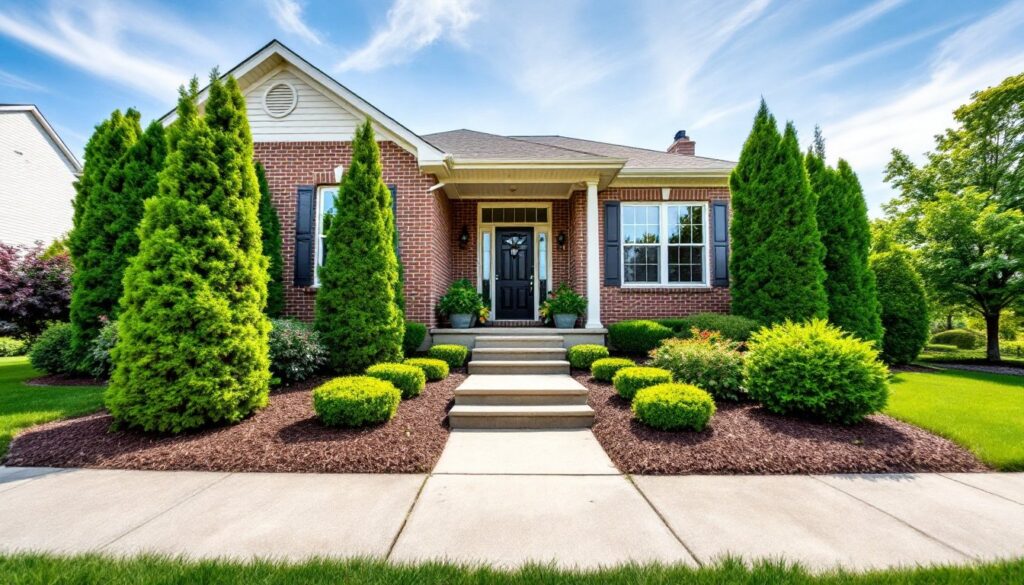
Foundation plantings set the tone for a home’s exterior, and evergreen shrubs deliver structure and color twelve months a year without constant fussing. Unlike perennials that vanish in winter or annuals that demand replanting, evergreens hold their ground through frost, heat, and neglect, exactly what busy homeowners need flanking the front entry or lining a porch. The right low-maintenance varieties ask for little more than an annual trim and occasional watering once established, freeing up weekends for projects that actually need attention. This guide walks through the best evergreen shrubs for foundation beds, how to get them in the ground properly, and design principles that keep plantings looking intentional instead of haphazard.
Table of Contents
ToggleKey Takeaways
- Low-maintenance evergreen shrubs provide year-round structure and color for foundation plantings without seasonal gaps or constant fussing, making them ideal for busy homeowners.
- Top evergreen shrub varieties for front yards include boxwood for formal elegance, dwarf Alberta spruce for northern climates, inkberry holly for wet shade areas, and Japanese pieris for spring interest.
- Proper planting in early spring or fall with holes two to three times wider than the root ball, native soil backfill, and consistent first-year watering ensures evergreens establish strong roots and thrive.
- Layer evergreen shrubs by height using odd-numbered groupings in staggered arrangements to create depth and visual interest while respecting mature sizes and avoiding the dated ‘gumdrop line’ look.
- Once established, low-maintenance evergreens typically survive on rainfall alone and need only annual mulch top-dressing and occasional pruning, freeing weekends for other priorities.
Why Choose Evergreen Shrubs for Your Front Yard?
Evergreen shrubs earn their place in foundation plantings by solving multiple landscaping problems at once. They anchor a home’s architecture year-round, softening hard corners and breaking up expanses of siding or brick without seasonal gaps. Deciduous shrubs leave bare stems from November through April in most zones, fine for backyard borders, less ideal when framing the main entrance guests see first.
From a maintenance standpoint, evergreens outperform most alternatives. Established plants typically survive on rainfall alone in moderate climates, and their root systems stabilize soil around foundations better than shallow-rooted annuals. Pest and disease resistance varies by species, but hardy varieties like yew and juniper shrug off common garden nuisances that plague roses or hydrangeas.
Evergreens also function as natural privacy screens and wind buffers. A row of arborvitae or skip laurel planted eighteen to twenty-four inches apart will fill in within three to five years, blocking street views and reducing drafts near windows, practical benefits that compound the aesthetic payoff.
One consideration: evergreens don’t cycle nutrients back into soil the way deciduous plants do with seasonal leaf drop. Plan to top-dress beds with one to two inches of compost annually to maintain soil fertility, especially in sandy or clay-heavy soils that lack organic matter.
Top Low Maintenance Evergreen Shrubs for Foundation Plantings
Selecting shrubs matched to local hardiness zones and mature sizes prevents headaches down the line. A plant rated for zone 6 won’t survive zone 4 winters, and a variety that reaches eight feet tall will block first-floor windows if planted too close. Check USDA zone maps and measure the space between foundation and walkway before buying.
Boxwood: The Classic Choice for Formal Elegance
Boxwood (Buxus) anchors formal landscapes with dense, small-leaved foliage that tolerates shearing into geometric shapes or hedges. Dwarf cultivars like ‘Green Gem’ and ‘Winter Gem’ stay compact, two to four feet tall, making them ideal for planting beneath windows or along walkways where larger shrubs would crowd.
Boxwoods prefer well-drained soil and partial shade to full sun, though afternoon shade in hot climates prevents leaf scorch. Avoid planting in low spots where water pools: root rot kills more boxwoods than any other factor. Once established, they need watering only during extended droughts, roughly one inch per week when rainfall falls short.
Pests include boxwood leafminer and boxwood blight, a fungal disease that’s spreading in eastern states. Blight-resistant varieties like ‘NewGen Independence’ and ‘Wilson’ offer insurance in affected regions. Many homeowners appreciate naturally rounded evergreen shrubs that require less frequent pruning to maintain shape.
Shear boxwoods once in early summer after spring growth hardens off, using manual hedge shears or electric trimmers for straight lines. Skip fall pruning, new growth won’t harden before frost and will die back, creating bare patches.
Dwarf Alberta Spruce: Year-Round Structure and Color
Dwarf Alberta spruce (Picea glauca ‘Conica’) brings vertical accent to foundation beds with its tight, pyramidal form and bright green needles. Mature height tops out around six to eight feet after ten to fifteen years, slow growth that keeps it manageable without constant trimming.
This spruce thrives in full sun and tolerates cold down to zone 2, making it a go-to for northern climates where broadleaf evergreens struggle. It handles clay and loam soils equally well as long as drainage is adequate. Water weekly during the first growing season to establish roots, then taper off.
Spider mites plague dwarf Alberta spruce in hot, dry conditions, turning needles bronze and stunting growth. Spray foliage with a strong stream of water weekly in summer to knock mites off, or apply horticultural oil if populations spike. Avoid planting near south-facing walls where reflected heat creates ideal mite habitat.
Pruning is rarely needed beyond removing dead or broken branches. The tight growth habit self-maintains its conical shape. If lower branches brown out from lack of light, don’t prune them off, address the underlying cause (overcrowding, poor air circulation) instead.
Other reliable low-maintenance options include inkberry holly (Ilex glabra), which tolerates wet soil and shade better than most evergreens, and Japanese pieris (Pieris japonica), which adds spring interest with cascading white or pink flower clusters. Both resist deer browsing, a major consideration in suburban and rural areas.
How to Plant and Care for Your Evergreen Shrubs
Proper planting makes the difference between shrubs that thrive and ones that limp along for years before dying. Timing matters: plant container-grown evergreens in early spring or early fall when temperatures are moderate and rainfall is more consistent. Avoid planting in summer heat or late fall when roots won’t establish before freeze-up.
Dig holes two to three times wider than the root ball but no deeper, planting too deep smothers roots and invites crown rot. The top of the root ball should sit level with or slightly above surrounding grade. Break up compacted soil at the bottom and sides of the hole so roots can penetrate outward.
Backfill with native soil, not amended potting mix. Research shows roots often won’t grow beyond amended zones, staying confined to a small area instead of spreading. Tamp soil gently to eliminate air pockets, then water thoroughly to settle everything.
Mulch with two to three inches of shredded bark or wood chips, pulling it back a few inches from stems to prevent rot. Mulch moderates soil temperature, retains moisture, and suppresses weeds that compete for nutrients. Replenish annually as it decomposes.
Watering during establishment is critical. Newly planted shrubs need consistent moisture for the first full growing season, roughly one inch per week from rain or irrigation. Check soil four inches down: if it’s dry, water deeply at the base rather than sprinkling foliage. After the first year, most evergreens survive on rainfall except during severe drought.
Fertilizing is optional for established shrubs in decent soil. If growth seems stunted or foliage pales, apply a balanced slow-release fertilizer (10-10-10 or similar) in early spring at the rate specified on the package. Over-fertilizing promotes weak, leggy growth that’s prone to disease.
Watch for common issues like spider mites, scale insects, and root rot. Mites appear as fine webbing and stippled foliage: treat with insecticidal soap or horticultural oil. Scale looks like brown bumps on stems and leaves: scrape off by hand or apply dormant oil in late winter. Root rot shows as yellowing foliage and wilting even though moist soil, there’s no cure, so prevention through proper drainage is essential.
Design Tips for Arranging Shrubs at the Front of Your House
Foundation plantings follow a few basic principles that separate polished landscapes from random clumps of greenery. Layering by height creates depth: taller shrubs (four to six feet) go at corners or to frame entries, mid-height shrubs (two to four feet) fill spaces between, and groundcovers or low perennials edge beds. This tiered approach draws the eye up and across the facade instead of creating a flat, monotonous wall of foliage.
Odd-numbered groupings, three, five, or seven of the same variety, look more natural than even numbers or single specimens spaced like soldiers. Plant in staggered rows or clusters rather than straight lines unless aiming for formal symmetry.
Respect mature size. A shrub labeled as reaching five feet wide needs at least two and a half feet of clearance on all sides, measure from the center of where the plant will go, not from its current nursery container size. Crowding forces constant pruning and blocks airflow, inviting fungal diseases. Designers often work with home decor and gardening guides to refine spacing and plant selection.
Scale matters. A sprawling colonial with tall windows needs larger, bolder shrubs than a compact ranch. Conversely, planting six-foot junipers in front of a small cottage overwhelms the architecture. Match plant proportions to building mass.
Repetition ties a design together. Use the same shrub variety at regular intervals, flanking both sides of a door, at each corner, along a walkway, to create rhythm. Mix textures and foliage colors for contrast: fine-needled junipers against broad-leafed rhododendrons, dark green yews beside chartreuse or blue-toned cultivars.
Avoid the “gumdrop line”, a row of identically sized, rounded shrubs marching across the foundation. It’s dated and visually dull. Instead, vary heights and forms: upright columnar shrubs, mounding globe shapes, and spreading groundcovers create a more dynamic composition.
Consider seasonal interest beyond evergreen foliage. Some evergreens like winterberry holly (Ilex verticillata) hold bright red berries into winter, and pieris blooms in early spring. Mixing in a few deciduous accent shrubs or perennials adds pops of color without sacrificing year-round structure. Those seeking additional home and garden inspiration can explore complementary design strategies for cohesive outdoor spaces.
Leave space for utilities. Don’t plant over buried gas lines, water mains, or septic system components. Call 811 before digging to locate underground utilities, it’s free and required by law in most jurisdictions. Avoid planting near HVAC units or dryer vents where foliage will block airflow or get damaged by heat.
Conclusion
Evergreen shrubs anchor foundation plantings with year-round color and structure while demanding far less attention than high-maintenance alternatives. Choose varieties suited to local hardiness zones and available space, plant them properly with attention to drainage and spacing, and they’ll deliver decades of curb appeal with minimal fuss. The upfront effort, measuring, digging, mulching, pays off in weekends reclaimed from constant watering, pruning, and replanting.